
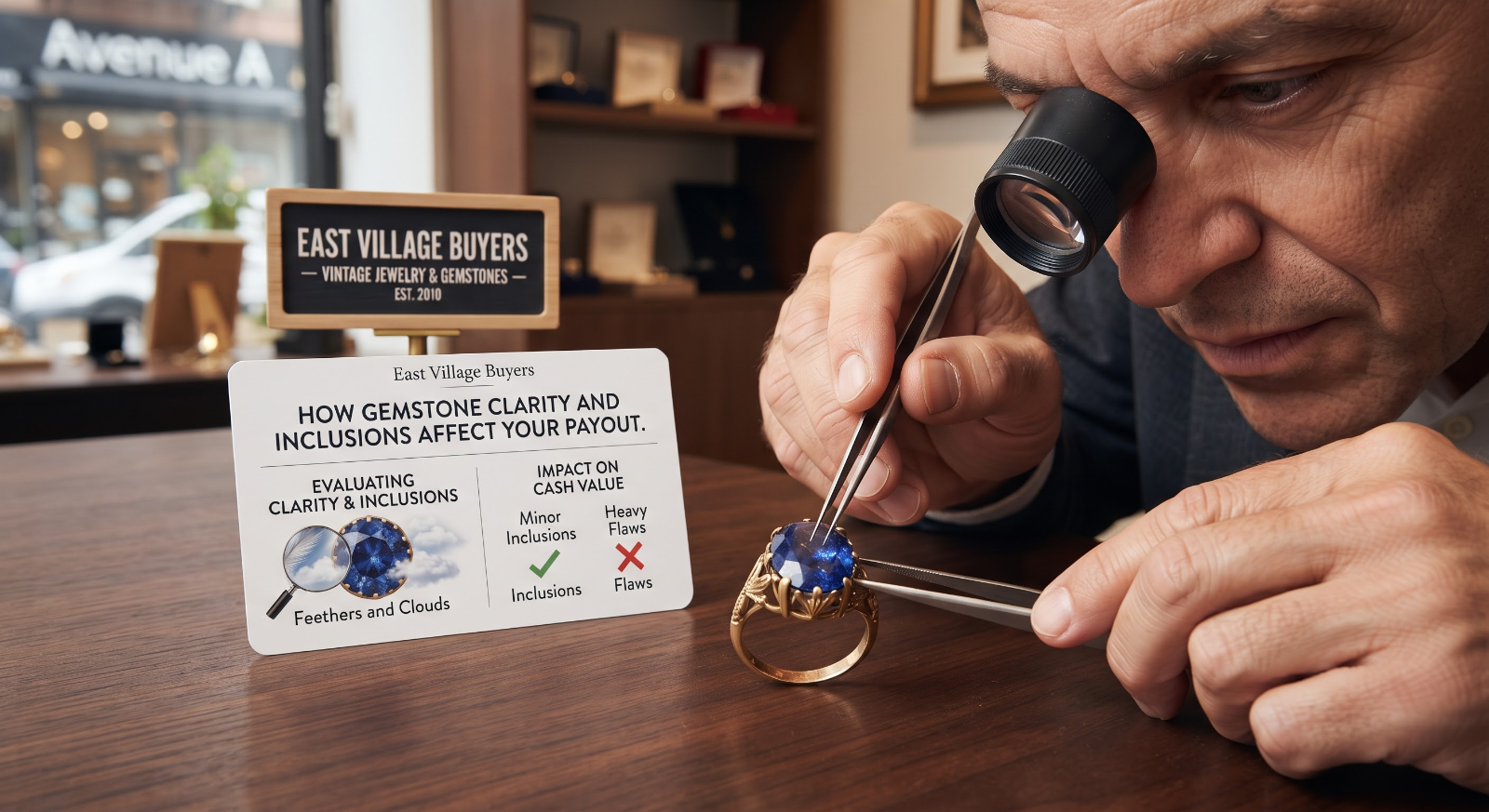
How Gemstone Clarity and Inclusions Affect Your Payout: Selling Vintage Jewelry at East Village Buyers
When you look closely at a vintage gemstone ring, you might notice tiny internal marks, wisps, or spots. These features are called inclusions. Almost all natural colored gemstones have them, but understanding how they impact resale value can help you know what to expect when you are ready to sell.
Unlike diamonds, which are graded under rigid, standardized charts, colored gemstones like rubies, sapphires, and emeralds are judged by a different set of rules. At East Village Buyers, when clients bring in estate or vintage pieces to our Manhattan storefront at 39 Avenue A, we look closely at whether those internal features threaten the stone's structural strength or dull its overall brilliance. A vibrant stone with minor inclusions will almost always command a higher cash offer than a cloudy, lifeless stone.
Common Inclusions We Look For in Vintage Jewelry
During our on-the-spot evaluations, we use professional magnification to inspect the stone's interior and surface. Not all flaws are created equal:
Feathers and Internal Fractures: Internal cracks that can weaken the stone if the piece takes a sharp knock.
Needles and Clouds: Tiny mineral tubes or hazy patches that can diffuse light and dull the stone’s sparkle.
Crystals: Miniature mineral deposits trapped inside the main stone while it was forming.
Surface-Reaching Cleavages: Chips or cracks breaking the outer edge, which pose a risk to the setting.
Note on Authenticity: Certain inclusions actually prove that a gemstone is natural rather than synthetic, which is a great asset when appraising antique and estate pieces.
How Treatments Impact Your Cash Offer
Many vintage and antique gemstones were treated with heat, oil, or dyes before being set into jewelry.
Heat Treatment: Extremely common and widely accepted in rubies and sapphires; it generally does not hurt your payout.
Heavy Treatments: Extensive glass-filling, fracture-sealing, or heavy dyes can deteriorate over time and will significantly lower a buyer's offer.
Untreated Stones: Completely untreated, high-clarity colored stones are rare and command top-tier market premiums.
What to Expect During Your Evaluation at East Village Buyers
We believe in a transparent, face-to-face evaluation process. When you walk into our East Village shop:
1. We Evaluate the Whole Piece: We test the gold, platinum, or silver band for purity and weight alongside the value of the center gemstone. You get paid for the complete item.
2. Bring Paperwork: If you have original lab reports, vintage certificates, or purchase receipts, bring them along to help verify natural origin and enhance your payout.
3. Keep Settings Intact: There is no need to remove stones from their original settings before bringing them in.
4. Zero Pressure: Our evaluations are 100% free with no obligation to sell.
Frequently Asked Questions
Does every flaw lower the price of a vintage gemstone?
Not necessarily. Minor inclusions that require a jeweler's loupe to spot rarely hurt value much—especially if the color is deep, rich, and vivid. Severe structural cracks or heavy cloudiness will lower the cash offer.
Can I text pictures of my gemstone ring for a preliminary quote?
Yes! You can text clear photos of your jewelry to get a rough estimate. However, accurately assessing clarity, treatments, and metal weight always requires an in-person look under proper lighting and magnification.
Sell Face-to-Face in NYC — Get Paid Instantly
Skip the shipping insurance fees, online listing hassles, and waiting games. Walk into East Village Buyers at 39 Avenue A for on-the-spot testing and immediate cash, or text us your photos today to get started.