
If you've ever brought a piece back to sell and been surprised by how far the offer was from what you paid, you've run into retail markup — and it's bigger than most people expect. Here's where that gap actually comes from.
Where the Markup Actually Goes
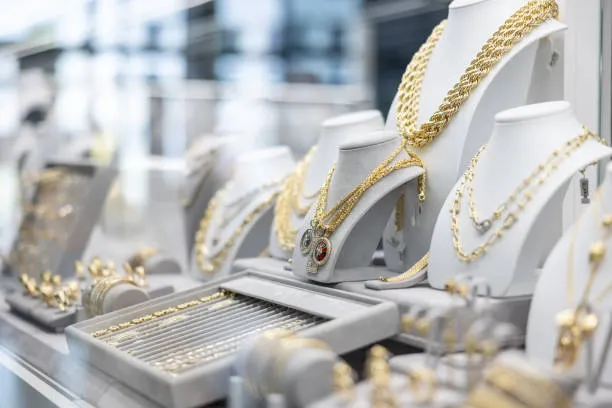
A typical piece of retail jewelry — a ring, a necklace, a bracelet — carries a markup of 100% to 300% over the cost of its materials and labor. That markup covers the store's overhead: rent on a display case like the one pictured, staff, marketing, packaging, and profit. None of that is something a resale buyer is paying for.
What Resale Actually Prices
When you sell, the offer is built from the piece's real material content — gold weight and karat, diamond carat weight and quality, any other stones — priced against current market rates. It's a completely different calculation from the retail sticker, which is why the two numbers rarely look alike.
Does Brand Change Anything?
For a handful of globally recognized jewelry houses, brand does carry a resale premium because there's active collector demand for the name itself. For the vast majority of jewelry sold at retail, though, the name on the box doesn't move the needle — the materials do.
Getting a Fair Read on What You Have
We weigh the metal, evaluate any stones under magnification, and price the piece on material content — transparently, in front of you, so you can see exactly how the number was built rather than getting a flat take-it-or-leave-it offer.