
Silver Coins · East Village
Sell Silver Coins in NYC
Pre-1965 dimes, quarters and halves, war nickels, Morgan and Peace dollars, Eagles and rounds. Counted, weighed and priced off live spot at 39 Avenue A.
Start Here
What Junk Silver Actually Is
The term sounds dismissive and it is not meant to be. Junk silver just means circulated US coins with no collector premium, valued purely on the silver in them.
US dimes, quarters and half dollars struck in 1964 and earlier are 90 percent silver. From 1965 the composition changed to copper-nickel and those coins contain no silver at all. A single date is the entire dividing line, which is why sorting by year is the first thing that happens.
It is called junk because the coins themselves are common and worn. There is nothing junky about the payout — this is one of the most straightforward transactions we do.
The Formula
Face Value Is the Shortcut
Nobody weighs junk silver coin by coin. The trade uses a shortcut that works because US coinage was struck to a consistent standard.
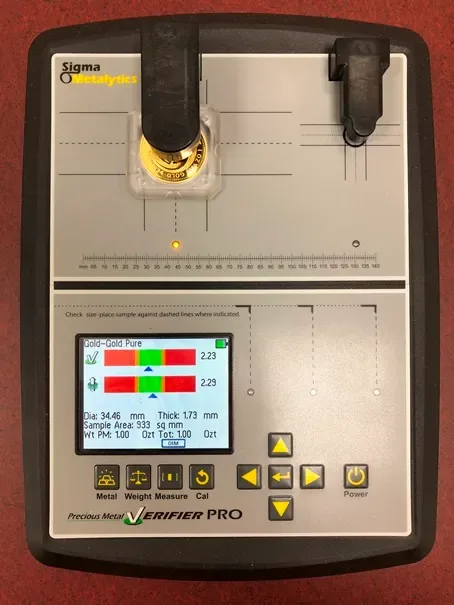
One dollar of face value in pre-1965 US coins contains roughly 0.715 troy ounces of silver. That holds whether the dollar is made of ten dimes, four quarters or two halves, because they were all struck to the same weight per unit of face value.
So $50 in face value is about 35.75 troy ounces of silver. Multiply by the live spot price and you have the melt figure before dealer spread. The ratio is slightly below the theoretical 0.7234 because circulated coins have lost a little metal to wear, and 0.715 is the standard working figure.
This means you can estimate your own position before you arrive. Add up the face value, multiply by 0.715, multiply by spot.
| Coin | Years | Silver | Per $1 face |
|---|---|---|---|
| Dime, quarter, half | 1964 and earlier | 90% | ~0.715 troy oz |
| Kennedy half | 1965–1970 | 40% | ~0.295 troy oz |
| War nickel | 1942–1945 | 35% | ~0.056 oz per coin |
| Morgan / Peace dollar | 1878–1935 | 90% | ~0.77 oz per coin |
| Dime, quarter, half | 1965 onward | none | Face value only |
$50 face in pre-1965 coin is roughly 35.75 troy ounces of silver.
Exceptions
War Nickels and 40 Percent Halves
Two categories break the simple pre-1965 rule and both get missed constantly.
War nickels. From mid-1942 through 1945, nickel was diverted to the war effort and five-cent pieces were struck with 35 percent silver instead. They are identifiable by a large mintmark letter above Monticello on the reverse, a placement used in no other year. Ordinary nickels from every other year contain no silver whatsoever.
Forty percent halves. Kennedy half dollars from 1965 through 1970 are 40 percent silver, a transitional composition between the 90 percent coins and the copper-nickel ones that followed. They are worth real money but noticeably less per coin than a pre-1965 half.
Both routinely turn up in jars that people assumed held nothing but face value.
Nickels struck from mid-1942 through 1945 contain 35% silver and are identified by a large mintmark letter above Monticello on the reverse — a placement used in no other year. Nickels from every other year contain no silver at all.
Above Melt
Morgan and Peace Dollars
Silver dollars are the one place in common US silver where the coin frequently beats its metal.
Morgan dollars (1878–1904, plus 1921) and Peace dollars (1921–1935) each contain about 0.77 troy ounces of silver, but many dates and mintmarks trade well above that on collector demand alone. Certain Carson City issues carry very substantial premiums.
Condition genuinely matters on these in a way it does not for worn dimes and quarters. An uncirculated Morgan with original lustre is a different proposition from one that spent decades in a till.
The same warning applies as with gold coins: do not clean them. A polished silver dollar is immediately obvious to any buyer and the premium goes with the shine.
Modern Silver
Silver Eagles, Rounds and Bars
American Silver Eagles contain one troy ounce of .999 silver and are the most widely traded silver bullion coin in the country. A few key dates and special issues carry a premium over bullion and we will flag yours if it is one.
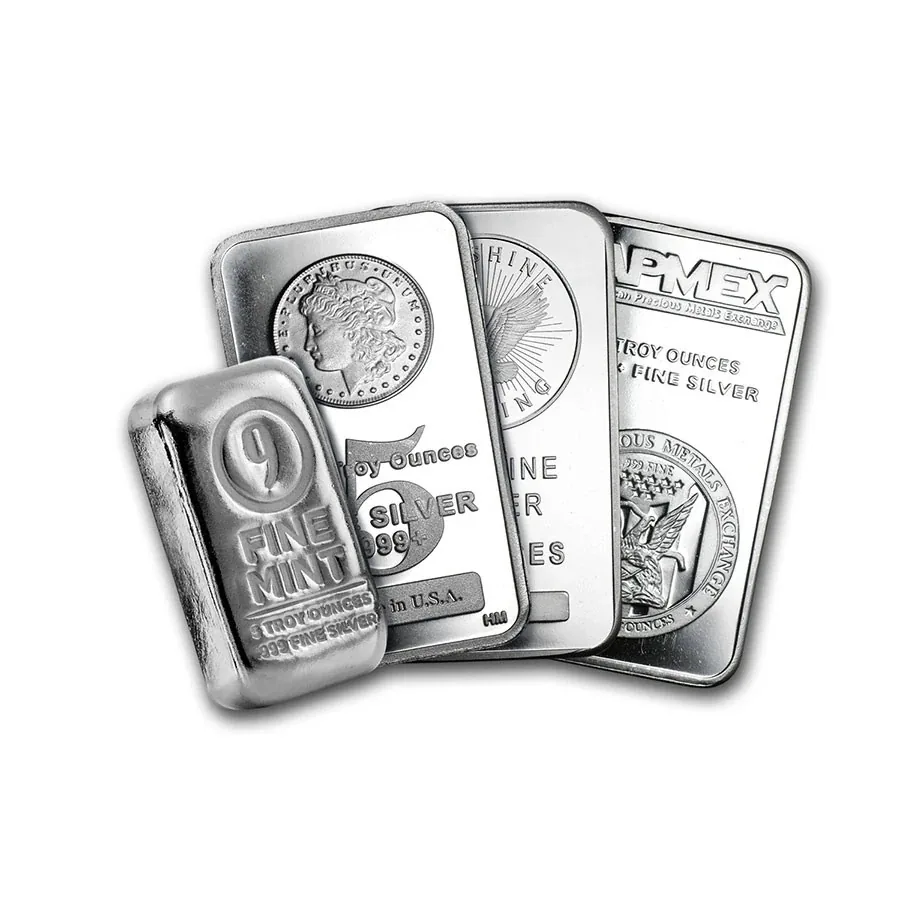
Generic rounds and bars from private mints are valued on silver content. Recognized refiners verify faster, but an unfamiliar round is tested rather than turned away.
Foreign silver — Canadian Maple Leafs, older British and Mexican silver coinage, pre-1967 Canadian dimes and quarters — all trade too, though purities vary by country and era, so each gets checked rather than assumed.