
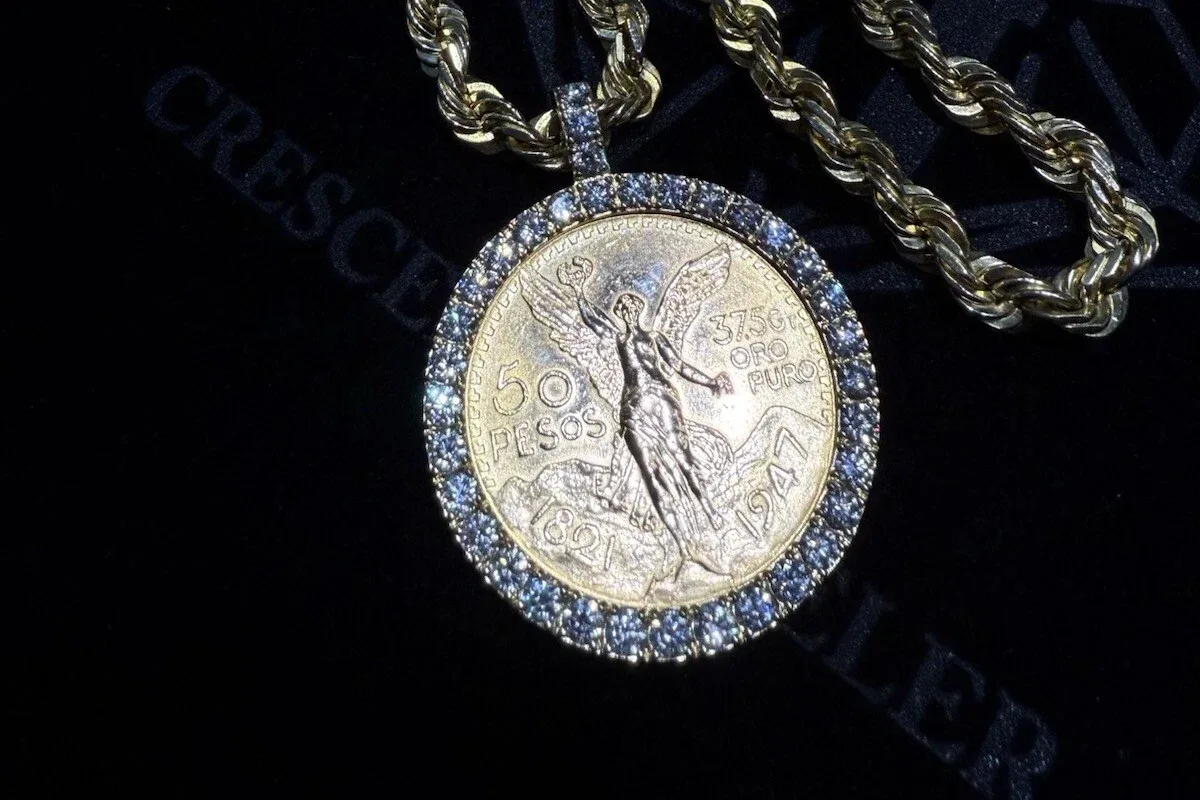
A gold coin necklace looks like one piece of jewelry, but it's really two separate assets stacked together: the coin itself, and whatever gold went into the bezel and chain holding it. People bring these in all the time — often a family piece from a grandparent or an older relative — and assume the value is one number. It's actually a combination of a few.
The Coin Itself
Most coins used in pendants, like the Mexican 50 Pesos shown here, were minted with a standardized gold weight and purity — this one is stamped right on the coin: 37.5 grams of pure gold. That specification doesn't change no matter how the coin is displayed, so we can calculate its base value directly from the day's spot price without needing to remove it from the setting.
Some coins carry additional numismatic value on top of their gold content — meaning collectors will pay a premium for a specific date, mint mark, or condition beyond what the gold itself is worth. Common-date coins used in jewelry, like most 50 Pesos pieces, typically don't carry much of that premium since so many were minted; the value is almost entirely in the gold.
The Bezel and Chain
The frame holding the coin, along with the chain, is usually gold in its own right — often 10K or 14K — and gets weighed and valued completely separately from the coin. A rope chain like the one pictured here can carry meaningful weight on its own, especially in a longer length.
Any diamonds or stones set into the bezel, like the small accent stones sometimes seen around the bail, are evaluated on top of that.
Does Mounting a Coin Hurt Its Value?
For coins bought purely for their gold content, no — the mounting doesn't change what the underlying gold is worth. For rarer or historically significant coins, serious collectors do consider permanent mounting a mark against numismatic value, since it usually means drilling or soldering a bail onto the coin. If you're not sure whether your coin falls into that category, bring it in and we'll look at the date and condition before making an offer.
How We Price a Coin Pendant
We weigh the whole piece, identify the coin's known gold content, and separate that from the bezel and chain weight using the coin's standard specifications. Each component then gets valued against the day's spot price. It's a more involved process than pricing a plain gold chain, but it means you get paid fairly for every gram in the piece — not just an average guess.