
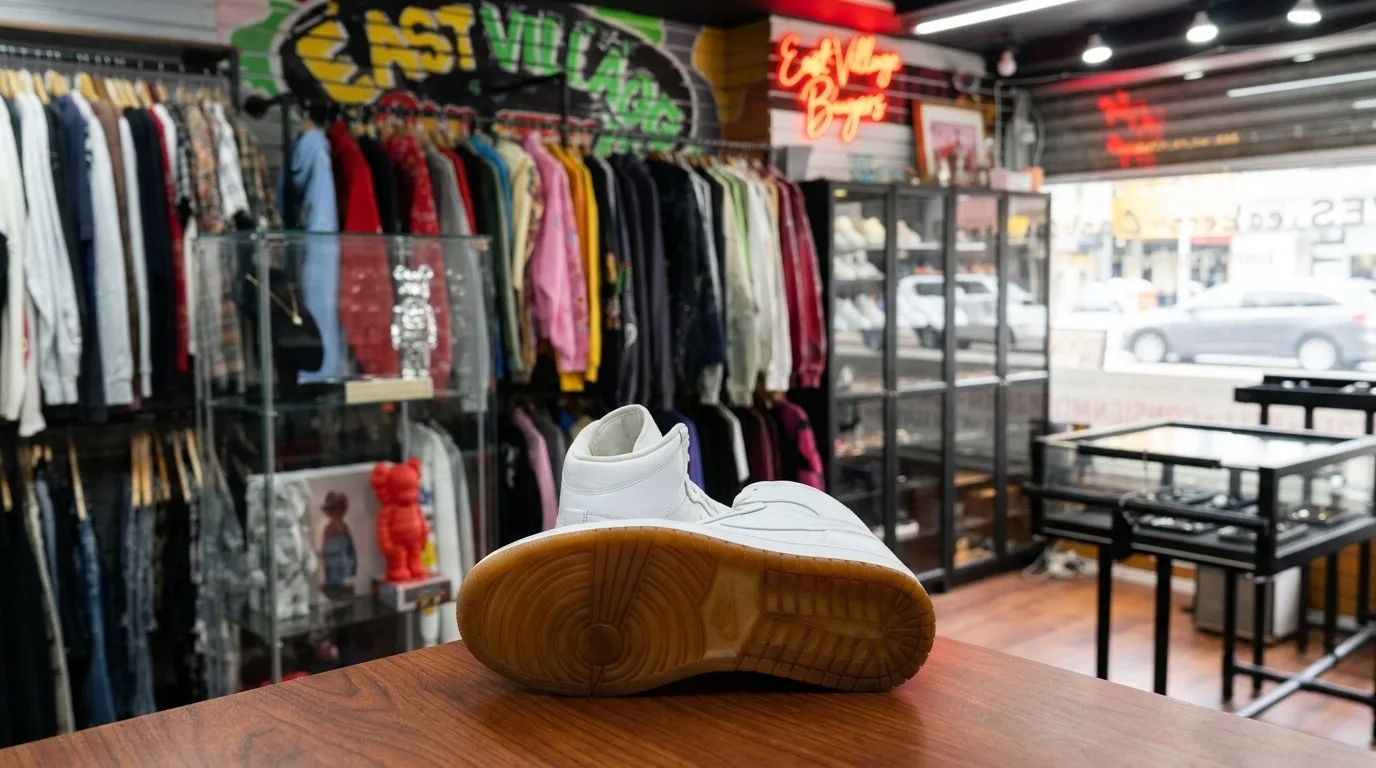
Understanding Sole Oxidation
If you own sneakers with clear or white rubber soles, you have probably watched them turn yellow over time. This process is called oxidation. Oxygen, moisture, and light react with the chemicals in the rubber. It happens to almost every pair eventually, even if they stay in a box inside a dark closet.
When selling sneakers, many people worry that yellowing ruins the value completely. That is not always true. How much it matters depends heavily on the specific sneaker model, how old the shoe is, and whether sneakerheads expect that release to show age.
In a retail shop setting, like our store on Avenue A, buyers see dozens of oxidized shoes every week. We look at oxidation as just one part of the overall condition score.
When Yellowing Drops the Price
For modern, recent releases, buyers usually expect the soles to be bright and clear. If a pair came out last year and already has heavy yellowing, it signals that the shoes were stored in humid conditions or worn in bad weather. In those cases, oxidation will drop the offer price.
Factory-fresh condition commands the highest prices in the resale market. If a shoe is listed as deadstock or brand new, but the soles have turned dark yellow, it can no longer be sold as pristine condition. The payout will adjust to reflect a worn or aged classification.
When Oxidation Is Accepted or Preferred
For vintage releases and classic retros, yellowing is natural and expected. Collectors know that a sneaker from ten or fifteen years ago cannot have a crystal-clear sole unless it was unice-treated or kept in vacuum sealed storage. In fact, natural aging on an older pair proves the shoe is authentic to its original release era.
The key distinction is uniform aging versus dirty wear. A clean shoe with naturally yellowed soles is worth much more than a pair covered in heel drag, mud stains, and scuffs.
- Natural age yellowing on vintage pairs is expected by buyers.
- Uneven or premature yellowing from bad storage drops value.
- Sole separation or crumbling lowers value far more than color change.
How Buyers Check Oxidized Soles
When you bring sneakers in for an evaluation, a buyer inspects the soles closely. They are not just checking the color. They are testing the physical health of the rubber. Over time, oxidized rubber can harden, lose grip, or start to crumble.
A shoe with yellowed soles that are still firm and wearable holds good value. A shoe where the rubber has become brittle or begun separating from the midsole requires costly repairs, which significantly reduces what a buyer can pay.
Getting an Evaluation in NYC
If you are thinking about selling shoes with yellowed soles, clean the uppers first. Removing dirt from the leather or mesh makes the overall shoe look better, which helps your evaluation.
You do not need an appointment to get your shoes checked. You can bring your pairs directly into our shop at 39 Avenue A for a free walk-in evaluation, or text us clear photos of the uppers and soles to get a quote before coming in.
- Wipe down the uppers and midsoles before bringing them in.
- Bring the original box and accessories if you still have them.
- Text photos of the sole condition first for a fast quote.
Frequently Asked Questions
Does un-icing my soles increase the cash offer?
Restoring soles with un-icing cream can improve the visual appeal on newer pairs, but if done incorrectly, it can damage the rubber. If the shoe is older, buyers care more about structural strength than artificial whitening.
Can I sell sneakers with crumbling yellow soles?
Yes, but they will be valued as project pairs or sole-swap candidates rather than wearable shoes, which results in a lower offer.
How do I know if my shoes are too yellowed to sell?
As long as the shoe is authentic and structurally sound, there is usually a market for it. You can text photos to EVB to get direct feedback before making the trip.