
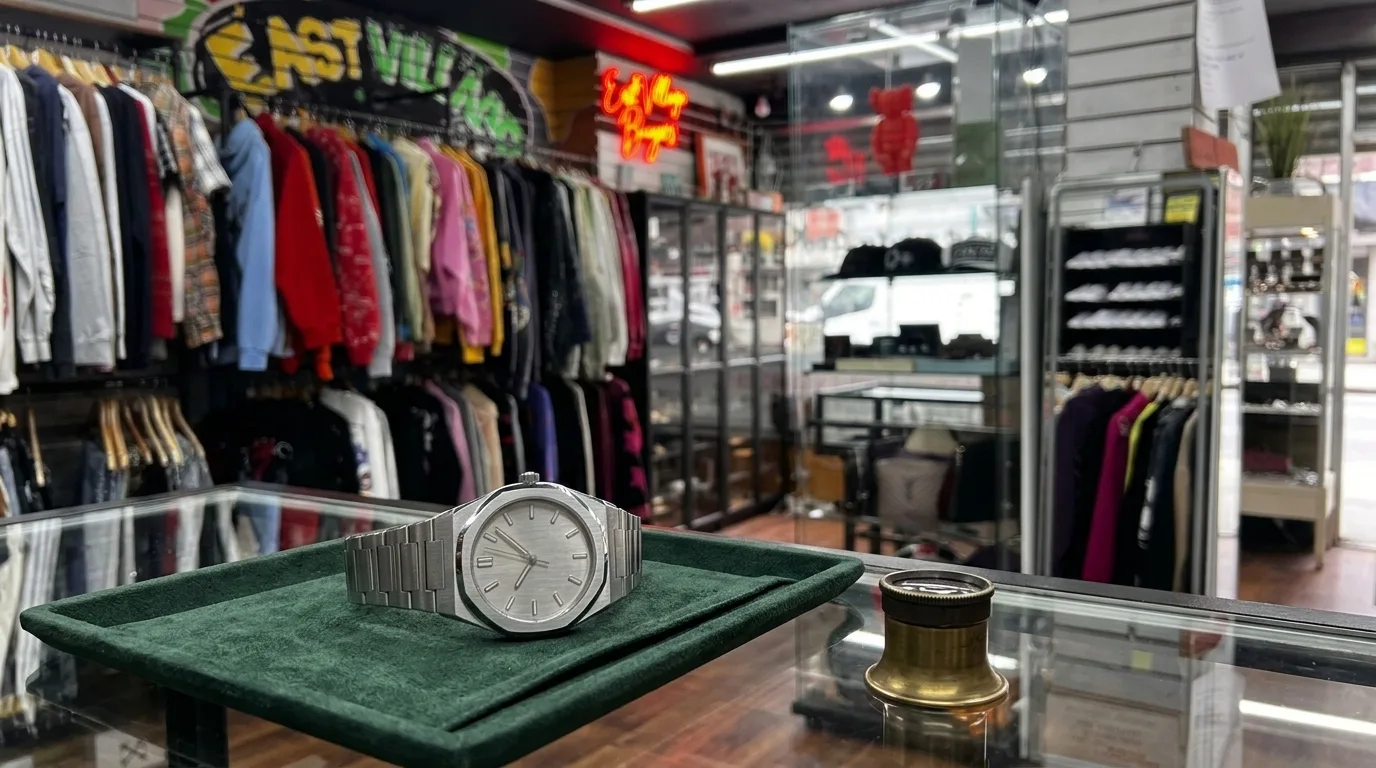
Why Polishing Can Hurt Watch Value
When you own a luxury watch, it is tempting to buff out every scratch. Scratches happen from daily wear on the subway, at work, or out in the city. Getting a watch polished makes it look bright and new again, but doing it too often removes metal from the case.
Watch buyers and collectors look closely at the shape of the case. Original factory cases have sharp edges, crisp bevels, and distinct brushed or polished finishes. Every time a watch is polished on a wheel, fine layers of metal are shaved away. Over time, those sharp corners become soft and rounded.
A watch like the steel model resting on the tray pictured above relies heavily on sharp geometric angles. Once those original lines are buffed out, you cannot easily put the metal back. That permanent change directly lowers what a buyer is willing to pay.
Signs of an Over-Polished Watch Case
You do not need to be a professional watchmaker to spot a case that has been buffed too many times. Comparing the watch to original factory photos usually makes the differences obvious.
When a watch is over-polished, key structural details start to blur. What was once a sharp line between the top and side of the lug becomes smooth and curved. The holes for spring bars or screws might bulge or look uneven.
Here are the most common signs that a watch case has lost its original shape:
- Rounded or soft edges on the lugs where they should be sharp and angled
- Uneven thickness between the left and right sides of the case
- Faded or blurred hallmarks, logos, and reference numbers stamped on the case back or between the lugs
- Worn-down crowns or bezel teeth that feel smooth instead of grippy
Original Condition vs Squeaky Clean
In the pre-owned watch market, collectors almost always prefer a watch with honest scratches over a watch that has been heavily polished. Scratches tell the story of regular use, but the underlying shape remains original.
When a buyer looks at an unpolished watch with surface wear, they see a clean slate that retains its factory proportions. When they see a heavily polished watch, they see missing metal and altered geometry. That is why an unpolished watch with minor scuffs often commands a higher payout than a shiny watch with rounded lugs.
If you are thinking about selling your watch soon, hold off on sending it in for a cosmetic polish. Let the buyer assess the case as it sits.
How Buyers Determine Value on Polished Watches
When assessing a watch, buyers evaluate several factors together rather than focusing on just one detail. The condition of the case is a major factor, alongside the movement, dial condition, and completeness.
If a watch has been lightly touch-polished during a routine service by an authorized center, the value impact may be minimal. However, aggressive third-party polishing that alters the case shape requires a price adjustment because the pool of interested collectors shrinks.
Key factors that influence the final payout include:
- Crispness of the case bevels and lug shape
- Visibility and depth of serial numbers and brand stamps
- Presence of original box, paperwork, and service receipts
- Current market demand for that specific reference and condition
What to Do Before Selling Your Watch
If you want to sell your luxury watch, do not worry about cleaning or buffing it up yourself. Avoid using household metal polishes or scrub cloths, as these can create uneven surface swirls and damage brushed finishes.
Bring the watch in as it is, along with any extra links, original boxes, guarantee cards, or past service papers you have. Paperwork from past services helps show whether work was done by the brand or an independent jeweler.
You can stop by East Village Buyers at 39 Avenue A for a free, no-obligation evaluation in person, or text clear photos of your watch to get an idea of what it might be worth before heading down.
Frequently Asked Questions
Should I polish my watch before bringing it in to sell?
No. It is best to leave the watch in its current condition. Polishing can permanently remove metal and lower the value, so let the buyer evaluate the original case shape first.
Does light polishing during a factory service ruin the value?
Light polish done by an authorized service center usually preserves the overall lines of the case. Value is primarily lost when heavy or repeated polishing rounds off sharp edges and flattens bevels.
How can I check if my watch has original unpolished lines?
Compare the lugs, bevels, and brushed finishes on your watch to detailed factory photos of the exact same reference number. Look for crisp edges and distinct transitions between brushed and shiny surfaces.
Can an over-polished watch case ever be restored?
Restoring an over-polished case requires specialized techniques like laser wire welding to add metal back, followed by precise hand-lapping. This process can be costly and is usually reserved for rare or high-value timepieces.