
Broken Gold Still Has Real Value
Many people keep snapped chains, mismatched earrings, or crushed rings tucked away in a dresser drawer. You might think damaged jewelry is worthless because you cannot wear it anymore. That is a very common misconception.
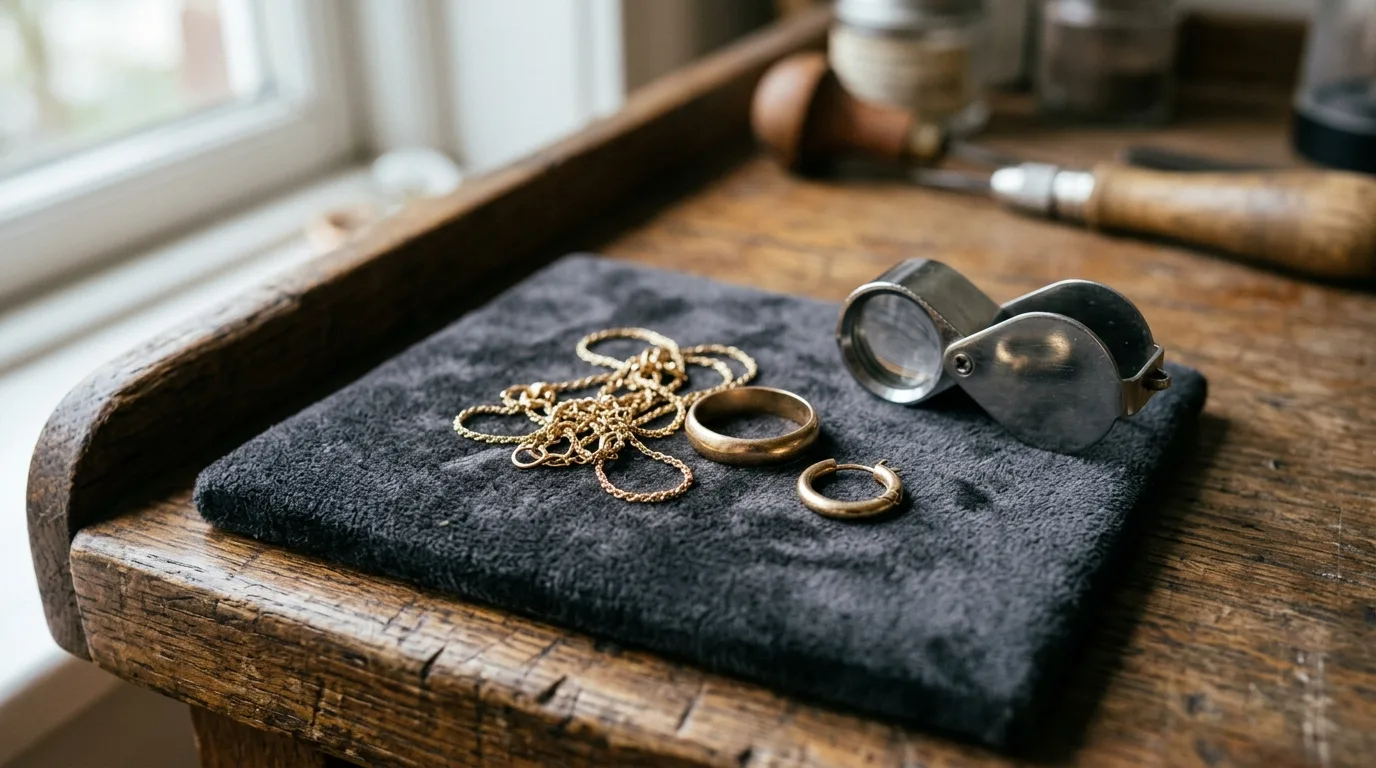
Gold is a precious metal that retains value regardless of its physical shape. When a buyer looks at a piece like the thin chain or band pictured above, they do not care if the clasp is broken or the band is dented. They care about how much pure gold is in the metal.
How Gold Purity and Weight Set the Price
The value of scrap gold comes down to two simple measurements: purity and weight. Pure gold is 24 karat, which is soft and rarely used for daily jewelry. Most jewelry is mixed with other metals for strength.
A buyer looks for small stamps called hallmarks. These markings tell you the purity level of the item.
- 10K gold contains 41.7 percent pure gold.
- 14K gold contains 58.3 percent pure gold.
- 18K gold contains 75 percent pure gold.
What Happens During a Gold Evaluation
When you bring broken gold to a shop, the buyer checks the markings with a magnifying loupe. If the stamps are worn down or missing, they perform a simple surface test or use an electronic tester to verify the purity.
Next, the pieces are placed on a calibrated scale. Gold is weighed in grams or pennyweights. The buyer calculates the exact weight of pure gold in your items and checks it against current live market prices.
What to Expect When You Sell Scrap Jewelry
Retail jewelry prices include design fees, brand markup, and labor costs. When you sell broken gold, you are selling raw metal for melting and refining. Expect to be offered a fair percentage of the underlying metal value, not what you originally paid at a retail store.
If your item has valuable gemstones, a good buyer will point them out. Small diamond chips in basic gold settings often do not add much value, but larger quality stones can be evaluated separately.
How to Prepare Your Broken Gold for Sale
You do not need to clean or repair your items before bringing them in. Cleaning broken pieces can cause small parts to snap off and get lost.
Gather everything you want evaluated at once. Bringing multiple small items together gives you a better idea of your total scrap value.
- Bring a valid state ID or driver license.
- Collect missing earring backs, loose charms, and small broken links.
- Separate items if you know which ones are real gold versus costume jewelry.
Get a Free Assessment in the East Village
East Village Buyers is located at 39 Avenue A in New York. We are a licensed second-hand dealer and offer free, zero-obligation evaluations for broken gold, scrap jewelry, and unwanted silver.
Walk in anytime during business hours for a immediate cash quote. If you want a quick estimate before coming down to the shop, feel free to text us clear pictures of your items and any visible stamps.
Frequently Asked Questions
Do I get less money if my gold chain is tangled or broken?
No. Scrap gold value is based strictly on weight and metal purity. A snapped or tangled chain is worth the exact same per gram as an unbroken chain of the same karat.
How do I know if my unmarked broken jewelry is real gold?
A buyer can test the item in front of you using touchstone testing or an electronic metal tester. This takes only a few minutes and does not ruin your item.
Should I remove stones from my broken rings before selling?
It is usually best to leave them in place. Removing stones yourself can damage the metal or lose weight. A buyer will evaluate the piece and explain how the stones affect the total quote.
What do I need to bring to sell gold in NYC?
New York law requires you to present a valid government-issued photo ID, such as a driver license or passport, when selling items to a licensed second-hand dealer.