
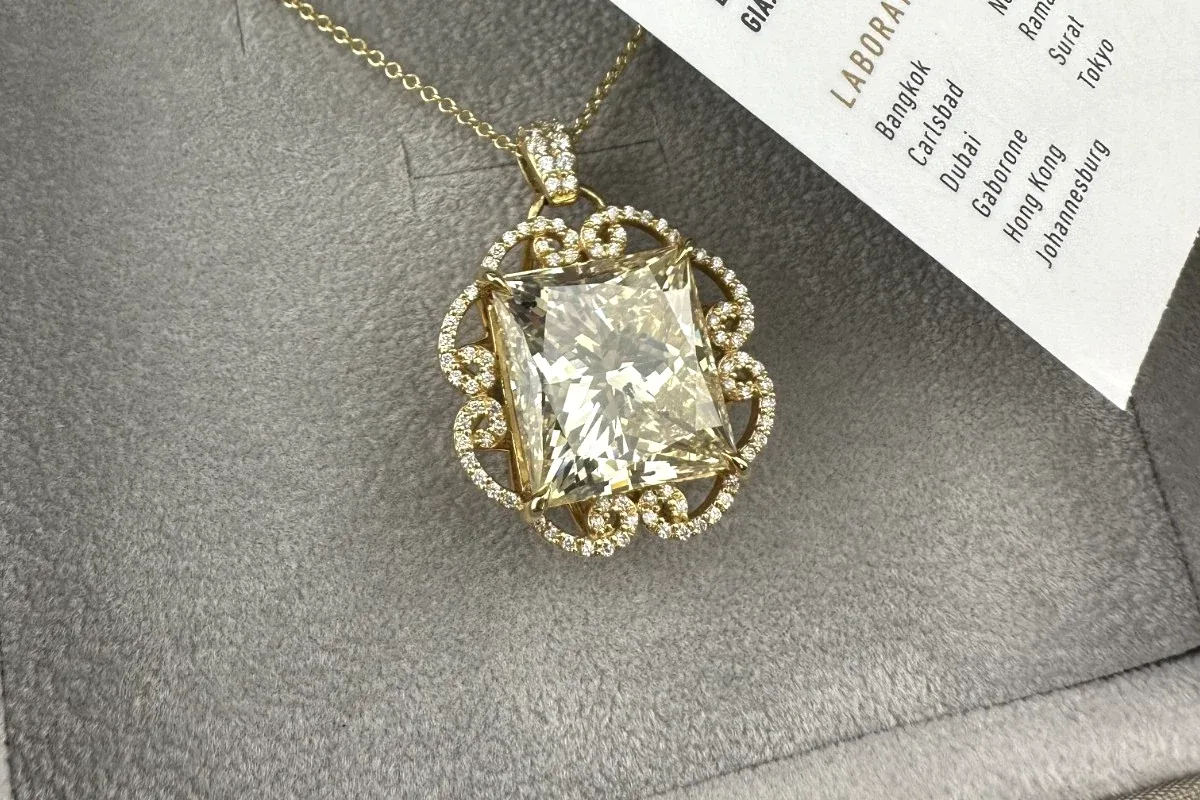
A lot of people bring in a diamond, hand over a folded piece of paper, and say some version of "it's certified, so it's worth a lot." That paper matters — but it's worth understanding what it actually says before you assume anything about price.
If the paperwork came from GIA, the Gemological Institute of America, you're holding one of the more reliable documents in the entire jewelry world. Here's what it really tells you, and what it doesn't.
What GIA Actually Does
GIA is a nonprofit research and educational institute, not a jewelry store or a grading service with something to sell. It's the organization that originally developed the 4Cs — carat, cut, color, and clarity — as a standardized way to describe a diamond. When a stone is submitted, GIA's gemologists examine it independently, with no financial stake in what grade it receives.
That independence is exactly why the report carries weight. A jeweler grading their own inventory has an incentive to be generous. GIA doesn't.
What's Actually on the Report
A GIA report lists the diamond's measurements, carat weight, cut grade, color grade, clarity grade, and often a plotted diagram showing the location of internal characteristics. It also assigns a unique report number, which can be searched on GIA's website to confirm the report matches a real, submitted stone.
None of that tells you a dollar figure. GIA doesn't appraise or assign value — it only describes the diamond. Price still depends on the market, the setting, and who's buying that day.
Why It Still Changes the Offer
Here's the practical part: an uncertified diamond forces a buyer to grade it themselves on the spot, and any uncertainty about clarity or color gets priced in as risk. A GIA report removes that guesswork. We already know what we're looking at before the stone even comes out of the setting, which usually means a faster, more confident number.
This is especially true for pieces like the pendant above — a fancy-shaped stone in a detailed halo setting is much easier to evaluate correctly when the report is sitting right next to it.
What to Do If You Don't Have the Paperwork Anymore
It happens more than you'd think — reports get lost during a move, a divorce, an estate cleanout. It doesn't mean the diamond can't be sold. We'll grade it in person the same way GIA would, using a loupe and standard reference stones. Having the original report just speeds things up and can support a stronger number, since it backs up what we find independently.