
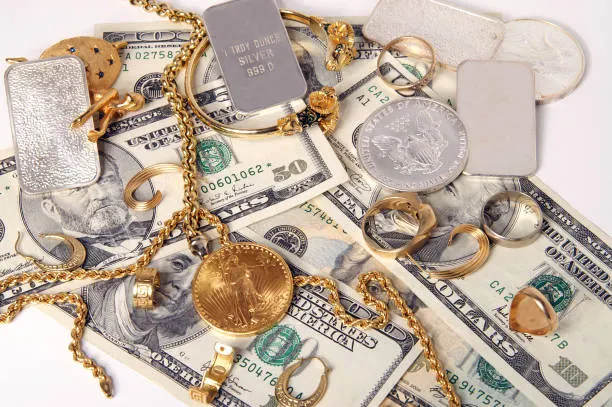
Want the most gold for your money? Buy bullion. Bars and coins are almost pure gold, and they're priced close to the gold inside them.
Want gold you can wear? Buy jewelry. Just know that part of the price is labor, design and the store's markup, not gold.
There's also a middle ground: pre-owned jewelry. Someone else already paid the retail markup, so you don't have to.
Bullion: You're Paying for the Gold
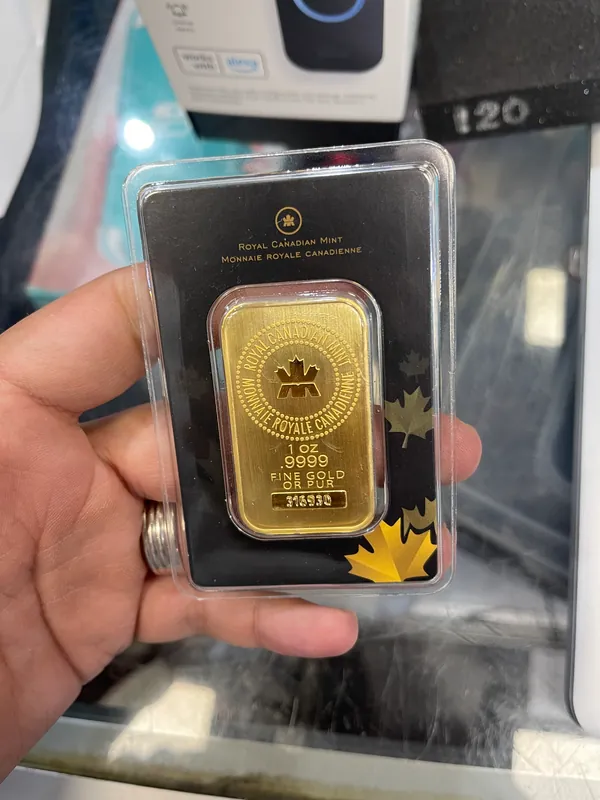
Bullion is gold in its simplest form. Most bars are stamped .999 or .9999 fine, which means 99.9% or 99.99% gold. You'll see names like PAMP, Valcambi and the Perth Mint on them.
Bullion coins like American Eagles, Canadian Maple Leafs and Krugerrands come from government mints. Each one holds a set amount of gold. Eagles and Krugerrands have a little copper mixed in to make them tougher, so they weigh a bit more than the gold inside.
New bullion costs the spot price of gold plus a premium. The premium pays for making the bar, shipping it and the dealer's costs. Small pieces carry a bigger premium per gram, so a tenth-ounce coin costs more per gram than a one-ounce bar.
When you sell, bullion is priced against spot again. That extra premium on small pieces doesn't fully come back.
Jewelry: You're Paying for Gold, Plus a Lot More
Most gold jewelry isn't pure gold. 14K is 58.3% gold and 18K is 75%. The rest is harder metal, so the piece can handle everyday wear. Our 10K vs 14K vs 18K guide explains each karat.
The price tag on new jewelry also covers the design, the work to make it, and the store's rent, staff and profit. That markup is often 100% to 300% over the cost of materials and labor. We break it down in why retail markup kills resale value.
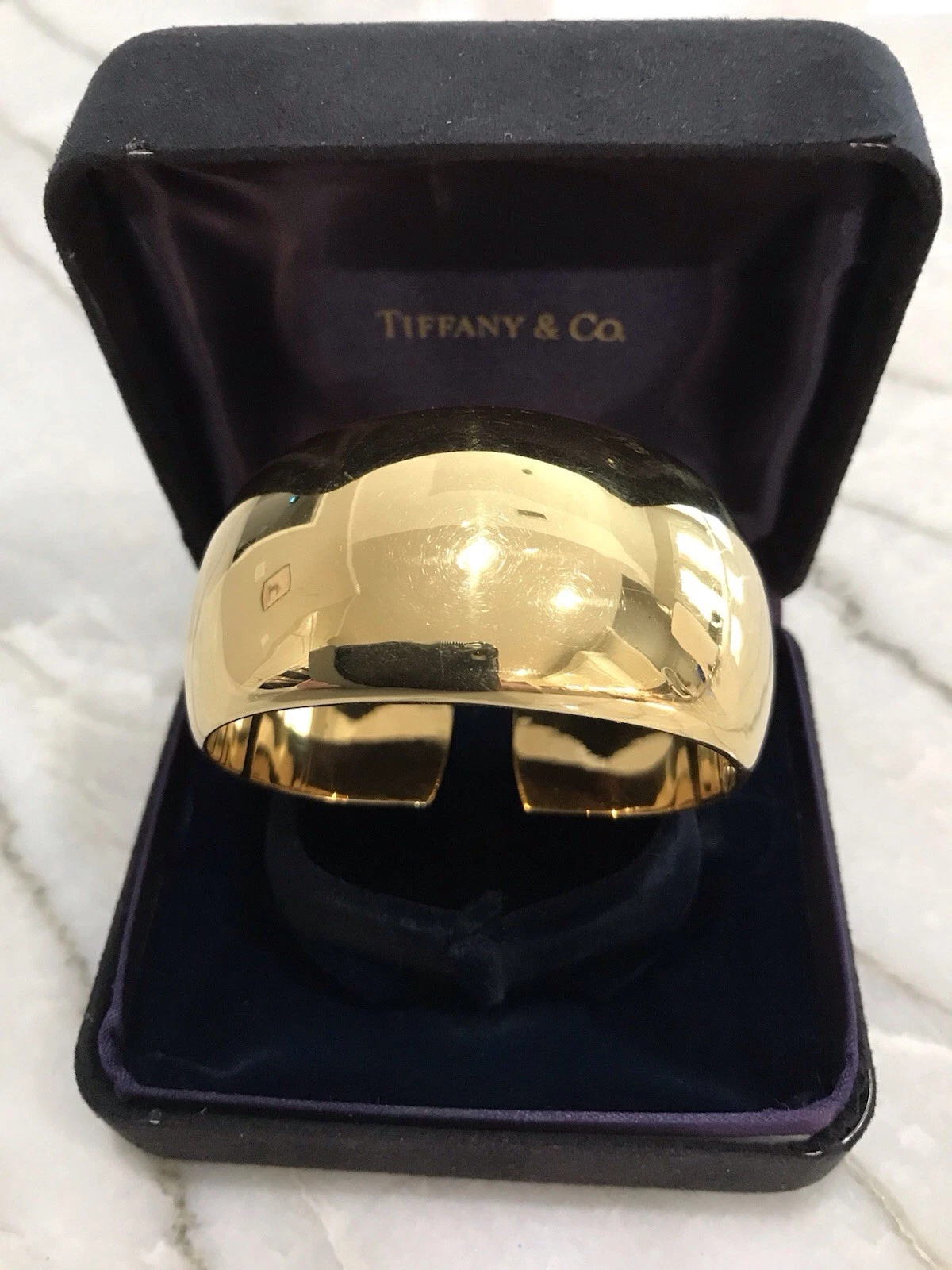
Here's the catch. When you sell plain gold jewelry, it's priced on the gold: weight times purity. The markup doesn't come back. Some designer pieces, like certain Cartier or Tiffany models, can sell for more than their gold, but that depends on the piece.
Bullion vs Jewelry at a Glance
| Gold bullion | Gold jewelry | |
|---|---|---|
| Purity | .999 or .9999 fine for most bars; coins hold a set amount of gold | Usually 10K to 18K (41.7% to 75% gold) |
| Price when new | Spot price plus a premium | Gold value plus labor, design and retail markup |
| Price when you sell | Priced against live spot | Priced on the gold, unless the brand adds value |
| Can you wear it? | No | Yes |
| Where it lives | A safe or safe deposit box | On you, or with your jewelry |
Which One Should You Buy?
Start with what the gold is for. After that, the choice is usually easy.
- Bullion makes sense if you want to own gold as metal, you'll store it instead of wearing it, and you want the most gold for your money.
- New jewelry makes sense if you want a specific design or brand, or a piece for a big moment like an engagement.
- Pre-owned jewelry makes sense if you want gold you can wear without paying the full retail markup.
We can't tell you if gold will go up or down. Nobody honestly can. What we can tell you is this: with bullion, more of your money is tied to the gold itself. With jewelry, more of it goes to something you get to wear.
Pre-Owned Jewelry: The Middle Ground
When jewelry sells a second time, the original markup is already gone. Plain pieces like chains, bangles and bands usually cost a lot closer to their gold value than they did in the first store.
Before you buy any gold, new or used, ask two questions. How much does it weigh in grams? What karat is it? Then check today's value with our gold price per gram calculator.
The gap between that number and the price tag is what you're paying for design, brand and the seller's cut. If a seller won't tell you the weight, walk away.
Buying or Selling Gold With Us
Check our store's Gold & Bullion and Jewelry sections to see what's in stock right now. Stock changes often, and every piece is inspected before it goes on the floor. Want to see something in person? Text us at 917-608-8939 and come by.
Selling? Bring in your bars, coins or jewelry. We'll test the gold in front of you, weigh it and give you an offer based on today's gold price. It's free, there's no obligation, and if you say yes, you're paid in cash the same day.
For bars and coins, here's how we price gold bullion.
Frequently Asked Questions
Is gold jewelry a good investment?
It's a way to own gold you can wear. But a big part of what you pay for new jewelry is labor, design and markup, not gold. When you sell plain gold jewelry, it's priced on the gold. If you mainly want to own gold, bullion keeps more of your money tied to the metal.
Is 24K gold jewelry the same as bullion?
The purity is close, but you still pay a maker's and seller's markup on 24K jewelry. It's also very soft, so it scratches and bends easily if you wear it every day.
Why does a gold coin cost more than the gold in it?
New coins sell for the spot price plus a premium. That covers minting, shipping and the dealer's costs. A few specific years and special issues are also worth extra to collectors.
Can I sell bullion and gold jewelry in the same trip?
Yes, bring it all. We test and weigh every piece. Bullion is priced against the live spot price, and jewelry on its karat and weight. If you take the offer, you're paid in cash the same day.