
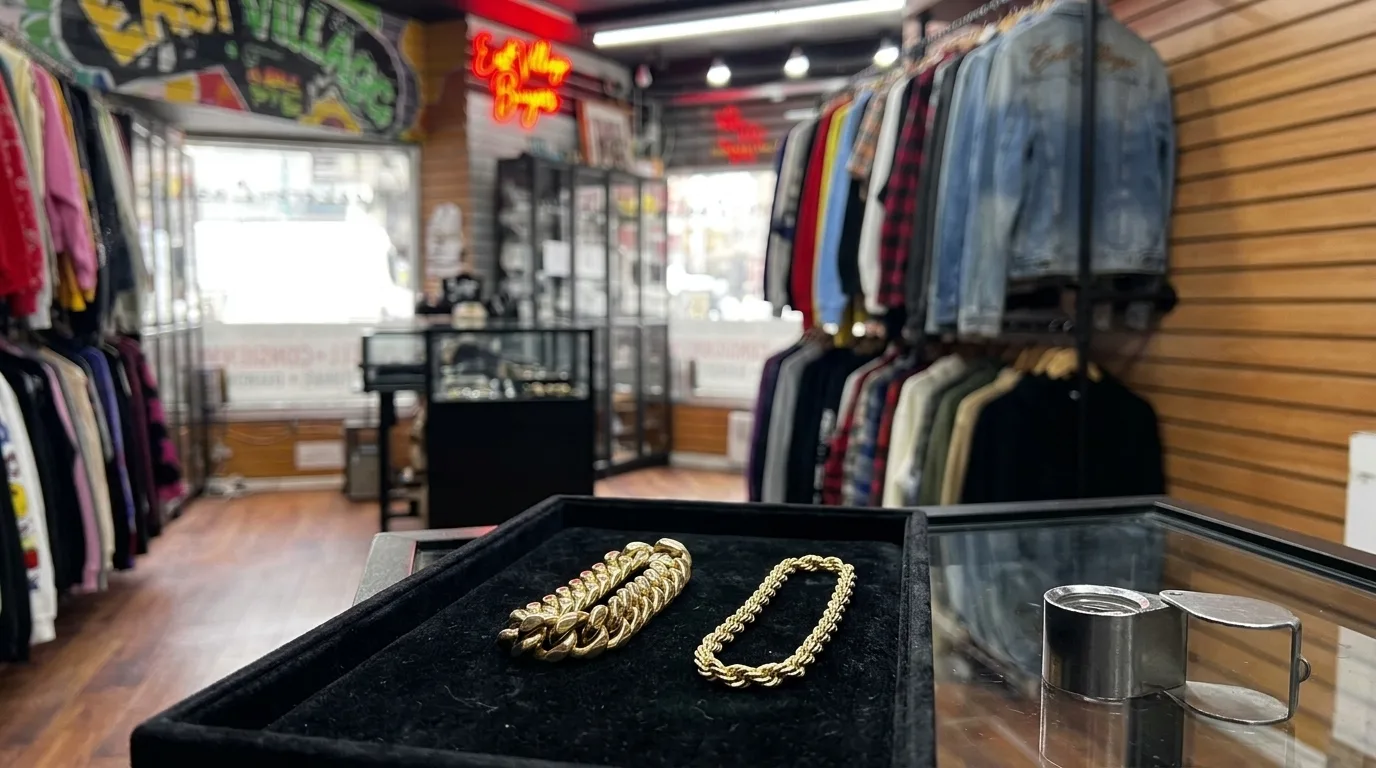
Looking Big Without the Heavy Weight
Two gold chains sitting side by side on a counter can look identical in width and style. When you pick them up, however, one might feel noticeably lighter than the other. This difference comes down to whether the chain is solid or hollow. Manufacturers make hollow gold chains by wrapping thin gold around a base metal core, which is later dissolved with acid, leaving a hollow tube inside each link.
This construction lets people wear a thick, stylish chain like a Cuban or rope link without paying for the full weight of solid gold. While hollow chains are lower in cost when bought new, that reduced weight plays a major role when you decide to sell them for cash later on.
How Weight Determines Scrap Gold Value
When a secondhand buyer evaluates gold jewelry, the payout relies primarily on two factors: the purity of the gold and the total weight on a scale. Fine gold is measured in karats like 10k, 14k, or 18k, which tell you the percentage of pure gold in the metal. The total weight is then measured in grams or pennyweights.
Because hollow chains are mostly air on the inside, a thick 14k hollow chain will weigh significantly less than a solid 14k chain of the exact same size. A buyer cannot pay based on how wide or long the chain looks. The final cash offer is based strictly on how much actual gold metal goes onto the scale after accounting for the karat rating.
- Physical Weight: Hollow pieces weigh far fewer grams than solid pieces of equal dimensions.
- Gold Purity: The karat stamp applies to the thin gold shell, not the empty space inside.
- Market Price: Live gold market rates apply only to the pure gold weight of the item.
Durability and Damage Impact Value
Solid gold chains are durable and can withstand daily wear for decades. If a solid link gets bent or nicked, a jeweler can easily repair or polish it. Hollow chains are much more delicate. Because the metal walls are thin, hollow links can dent, crush, or kink under pressure. Once a hollow chain is crushed, it is usually impossible to pop the link back into its original shape.
If a chain is being resold as a finished piece of wearable jewelry, condition matters heavily. Damaged hollow chains often cannot be resold as jewelry and must be treated as scrap metal to be melted down. Solid chains usually hold up much better over time, giving them a better chance of keeping retail value beyond their base metal weight.
How Buyers Test Hollow vs. Solid Jewelry
Checking whether a chain is hollow or solid is a standard part of evaluating gold jewelry. You can usually tell instantly by placing the item on a digital scale, but experienced buyers also look closely at the ends of the links under magnification. A jeweler loupe, similar to the one shown in the tray above, helps inspect the seams, clasps, and cut edges for signs of hollow construction or wear.
Buyers also perform acid testing or use electronic conductivity testers to confirm the karat purity of the metal shell. None of these tests damage your chain, but they ensure that the offer matches the genuine gold content of your item.
- Magnet Test: Checks for hidden iron or steel springs in clasps.
- Loupe Inspection: Looks for hollow seams, microscopic cracks, and hallmarks.
- Touchstone Acid Test: Verifies the exact karat level of the gold outer shell.
What to Know Before You Bring Your Chain In
If you are planning to sell a gold chain, it helps to keep your expectations aligned with how payouts work. If you bought a hollow chain retail, you paid for the craft and design work required to make a lightweight piece look large. When selling it secondhand, buyers can only pay for the physical gold present in the chain.
At East Village Buyers, we offer free walk-in evaluations at our shop at 39 Avenue A in New York City. You can bring in any gold chain to get weighed and tested on the spot with no obligation. If you are not sure if your chain is solid or hollow, you can also text clear photos to us first to get an initial estimate before making the trip.
Frequently Asked Questions
How can I tell if my gold chain is hollow or solid at home?
The easiest way to tell is by feeling its weight compared to its size. A thick chain that feels extremely light in your hand is almost certainly hollow. You can also check for small dented links, as solid gold will bend or scratch but will not crush flat like paper.
Do buyers pay less per gram for hollow gold than solid gold?
No. The price paid per gram of pure gold depends on the karat rating and current market values, not whether the item is hollow. However, because a hollow chain weighs many fewer grams overall, the total offer for the chain will be lower than a solid one of the same size.
Can a broken hollow gold chain still be sold for cash?
Yes. Even if a hollow chain is crushed or broken, the gold itself still has value. Buyers evaluate damaged gold chains based on their weight and karat purity as scrap metal.