
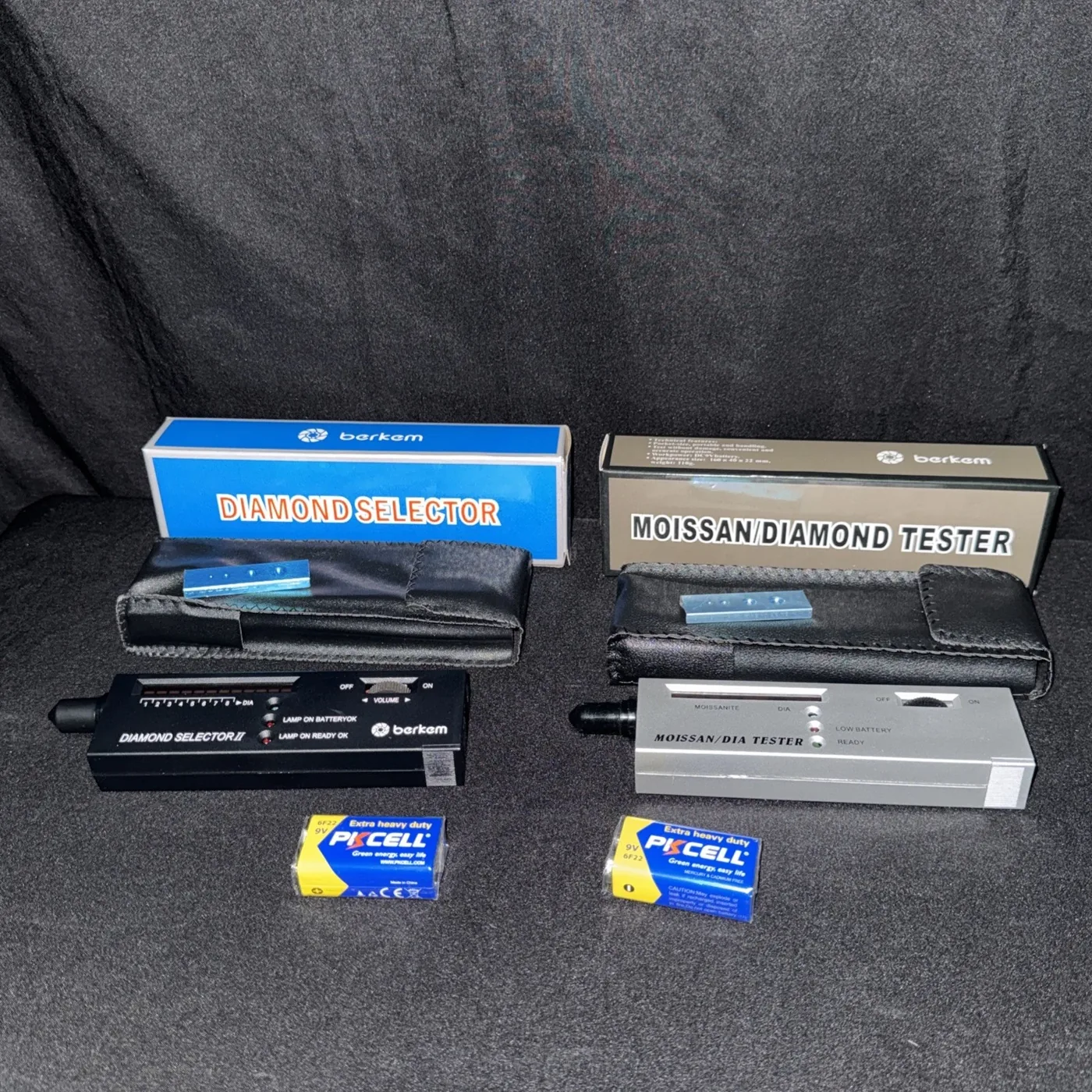
Every piece of jewelry that crosses a buying counter gets tested before anyone names a price. Some tests take two seconds, some take a few minutes, and none of them is perfect on its own. Here are the common ways gold, silver and diamonds get checked, what each one can and can't tell you, and why a real evaluation always uses more than one.
1. Stamps and Hallmarks
The first thing anyone looks at is the stamp, usually inside a ring band or on the clasp of a chain. Common gold marks are 10K, 14K, 18K or their European equivalents 417, 585 and 750. Sterling silver is usually marked 925, and platinum is often marked PT950 or PLAT.
Just as useful are the marks that say a piece is not solid:
- GP, GEP or HGE — gold plated, gold electroplated, or heavy gold electroplate
- GF or 1/20 12K GF — gold filled, a thicker gold layer bonded over a base metal
- RGP — rolled gold plate
- Vermeil — gold plating over sterling silver
A stamp is a starting point, not proof. Stamps wear off on old pieces, some genuine jewelry was never stamped, and counterfeit pieces are sometimes stamped 14K on purpose. Everything below exists because a stamp can't be taken at face value.
2. A Close Look Under a Loupe
A jeweler's loupe (usually 10x) shows things you can't see by eye. On plated pieces, the high points that rub against skin and clothing wear first, so look at clasp edges, the backs of pendants and the underside of ring shanks. A different color showing through, usually coppery or silvery, is a strong sign of plating. Green or black discoloration where the piece touches skin points the same way.
3. The Magnet Test
Gold, silver and platinum aren't magnetic. If a piece jumps to a strong magnet, there's base metal in it. That makes the magnet test a fast way to rule something out.
It only works in one direction, though. A piece that doesn't react could still be brass, copper or another non-magnetic metal under a thin gold layer. Clasps also often contain a small steel spring, so test the chain or band itself, not the clasp.
4. The Acid Test
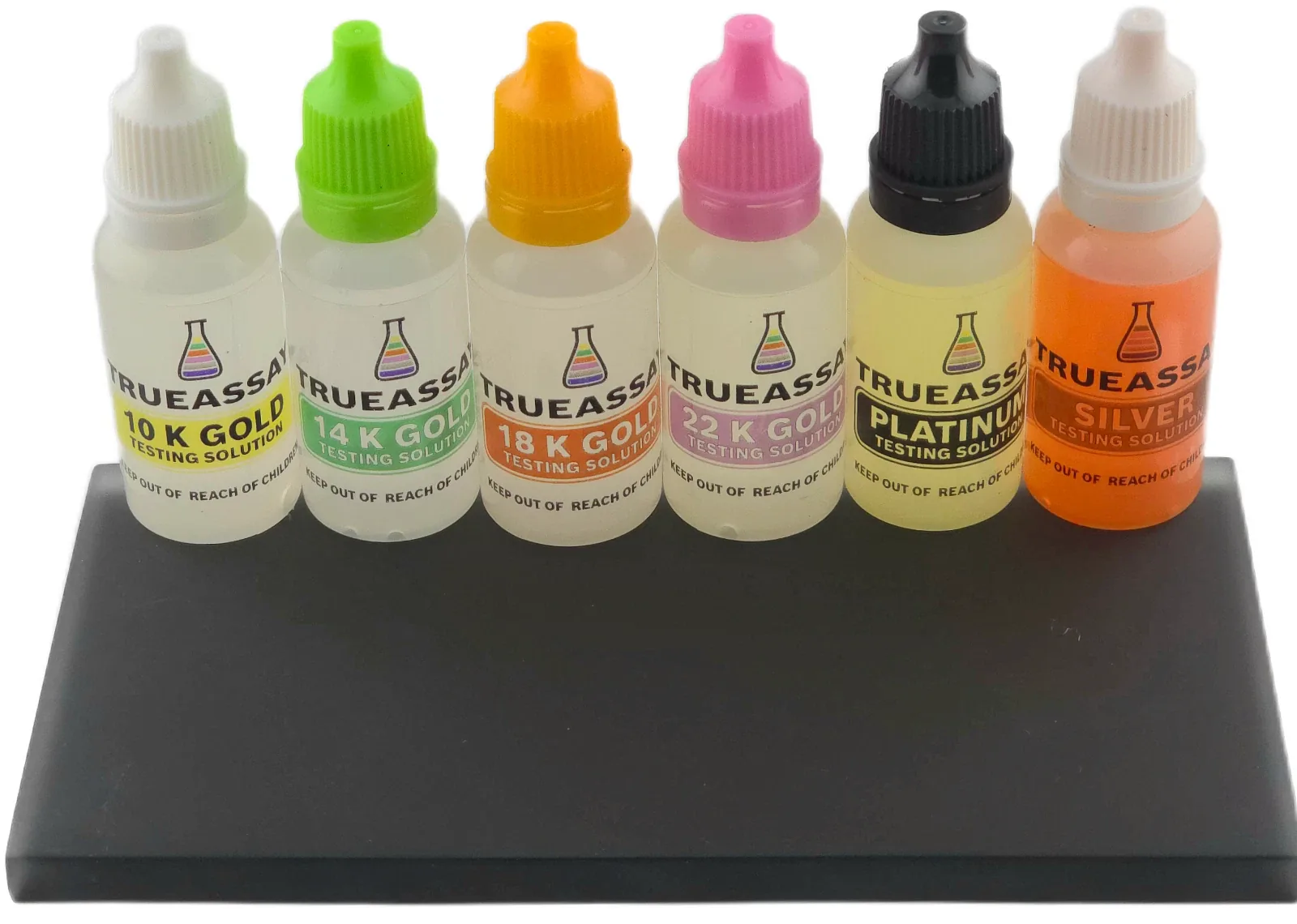
This is the classic buyer's test. The piece is rubbed on a black touchstone to leave a thin streak of metal, then drops of testing solution are applied to the streak. Each bottle is matched to a karat. Gold at or above that karat holds up under the acid, while lower-karat gold or base metal dissolves or changes color.
By working through 10K, 14K, 18K and 22K solutions, a tester can bracket the karat fairly closely. There are separate solutions for silver and platinum.
Two things to know. It leaves a tiny amount of metal on the stone, so it's lightly abrasive. And because a streak only samples the surface, a piece with heavy plating can pass a surface test. When plating is suspected, a tester may make a small file mark in an inconspicuous spot to reach the metal underneath before applying acid.
5. Electronic Gold Testers
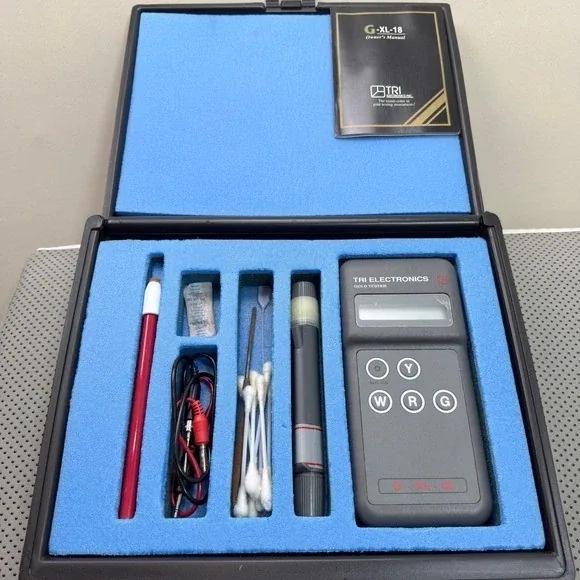
Electronic testers like the one pictured measure how the metal responds electrically at its surface, then report a karat reading. You pick the gold color first, since white and rose gold alloys behave differently from yellow. Then you apply a small amount of testing gel and touch the probe to the metal.
They're quick, they don't need a scratch on a touchstone, and they're handy on fine chains and small pieces. The limitation is the same as acid: they read the surface. Thick plating or gold-filled material can still produce a gold reading, so an electronic result is best confirmed with another test when something seems off.
6. Weight and Density
Gold is very dense, which is why solid gold jewelry feels heavy for its size. A density test uses that. The piece is weighed in air, then weighed again suspended in water, and the two numbers give its specific gravity.
- Pure 24K gold — about 19.3
- 18K gold — roughly 15 to 16, depending on the alloy
- 14K gold — roughly 13 to 14.5
- Sterling silver — about 10.4
Density is hard to fool with plating, because a heavy-looking plated piece still has a base metal core that weighs far less. It needs a precise scale though, and stones, hollow links or solder all skew the result. For why an ordinary kitchen scale isn't up to the job, see why your kitchen scale is lying to you about your gold's value.
7. Diamond and Moissanite Testers
Stones need different tools. The two testers in the photo at the top of this post work on two different properties, and that difference matters.
Thermal testers, often sold as diamond selectors, measure how fast heat moves through the stone. Diamond conducts heat exceptionally well, so it reads very differently from glass, cubic zirconia or white sapphire.
The catch is moissanite, which also conducts heat very well and can read as diamond on a thermal tester. That's why moissanite/diamond testers add an electrical conductivity check: moissanite conducts electricity, while most diamonds don't. Using both closes the gap.
What neither tester can do is tell a natural diamond from a lab-grown one. Lab-grown diamonds are real diamond and test as diamond. Some diamonds containing boron, including certain lab-grown and blue stones, can even trip a moissanite reading. Telling natural from lab-grown takes a grading report or lab equipment. More on that in lab-grown vs natural diamonds and what a GIA certificate actually proves.
Home Tests Worth Skipping
You'll find plenty of at-home tricks online. Most are unreliable, and a few can damage your jewelry:
- The bite test — gold is soft, but so are plenty of other metals, and you can dent the piece or your teeth.
- The float test — almost any solid jewelry sinks, gold or not.
- Vinegar or bleach — slow, inconclusive, and bleach can damage gold alloys and stones.
- Holding it to a flame — can discolor metal and crack or burn gemstones.
- The ceramic streak test — scratching on unglazed tile gives a vague color that plated pieces can fake.
For silver specifically, we've covered what works and what doesn't in how to test silver accurately.
Why One Test Is Never Enough
Every method above has a blind spot. Stamps can be faked, magnets only rule things out, acid and electronic testers read the surface, density needs a clean solid piece, and stone testers can't tell natural from lab-grown. The reliable answer comes from combining them. A stamp that matches an acid result, a clean electronic reading and a weight that makes sense for the size is a very different story from any one of those alone.
That's also why it's worth having a piece tested in front of you. When you bring jewelry to our counter at 39 Avenue A, you can watch each check happen and ask what it shows before we talk about a price.