
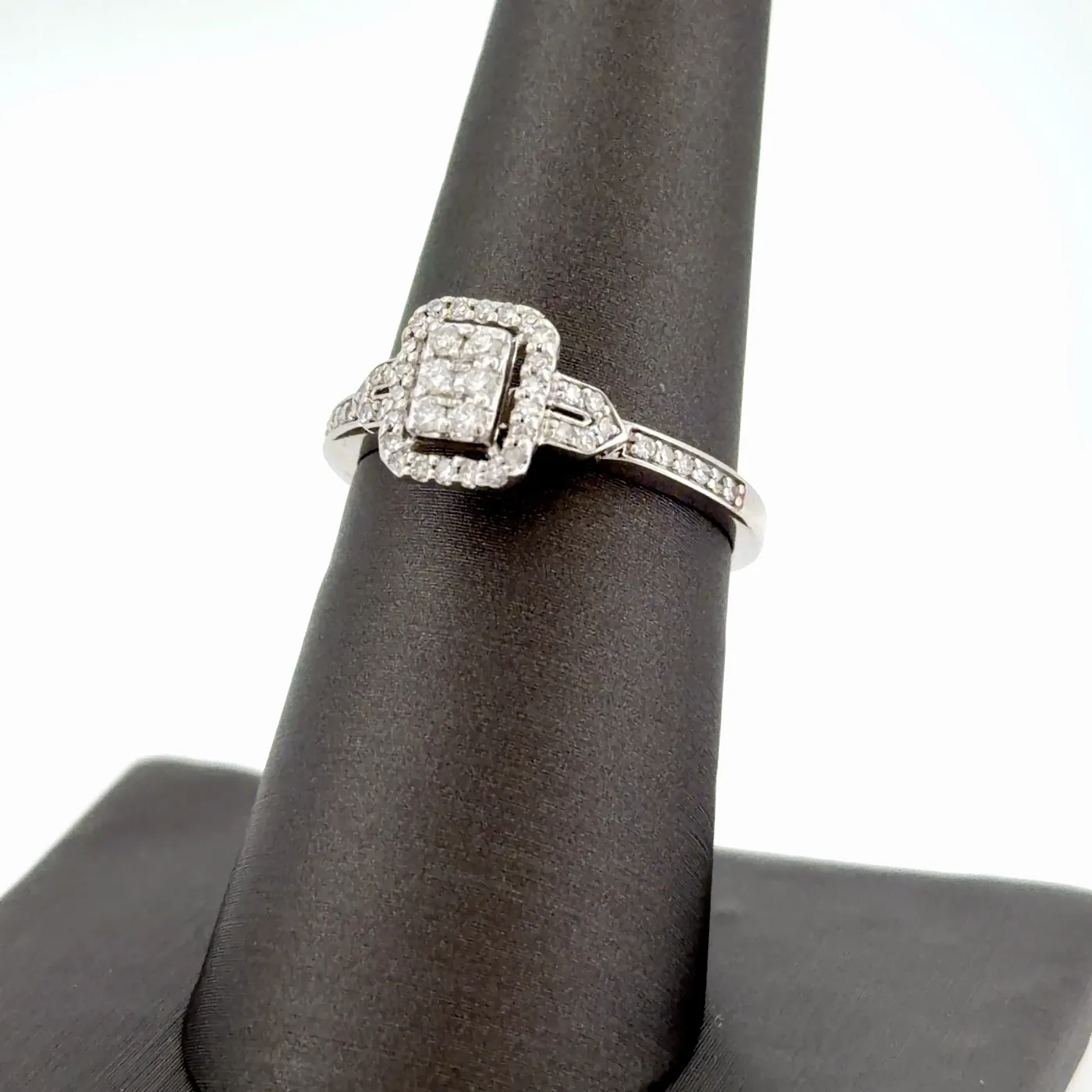
The ring pictured above reads as one rectangular diamond surrounded by a sparkling halo. Look closer and the "center stone" is actually six small round diamonds set side by side, framed by a halo of even smaller ones, with more running down the band. That design is called a cluster, and it's one of the most popular engagement ring styles sold today. It's also one of the most misunderstood when it's time to sell.
Cluster, Illusion and Halo Settings Explained
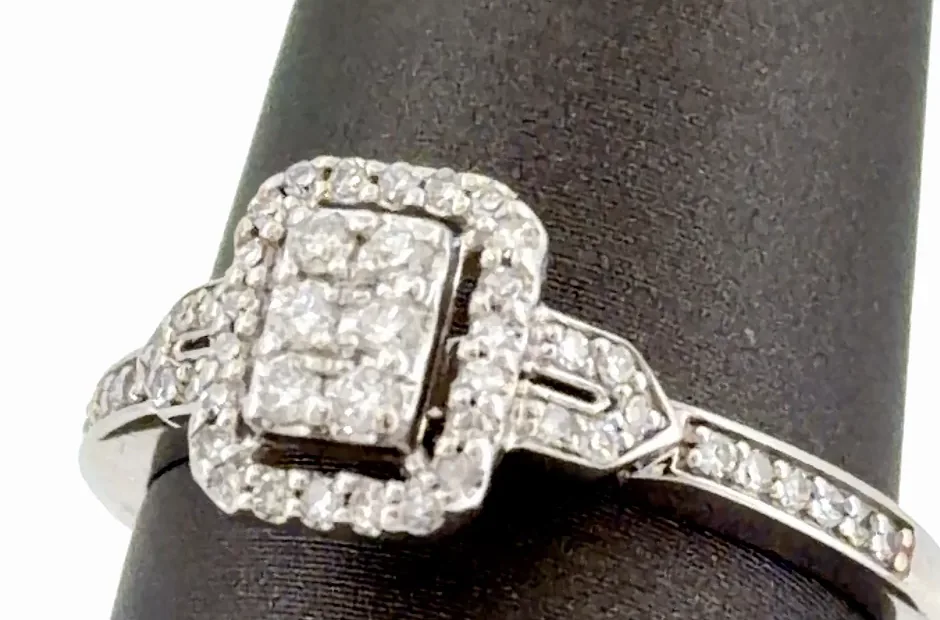
Cluster rings combine a few techniques, and most rings use more than one:
- Cluster — several small diamonds grouped to read as one larger shape.
- Illusion setting — the metal around the small center stones is polished or cut to reflect light, so the center looks bigger and more like a single stone.
- Halo — a frame of small diamonds around the center that adds sparkle and visual size.
- Pavé band — small diamonds set along the shank, like the shoulders and band on this ring.
Put together, a ring like this one can easily carry several dozen diamonds. Each one is tiny, but together they create the look of a much bigger stone.
Total Carat Weight vs. One Diamond
Cluster rings are sold by total carat weight, written as 1/2 CT TW or 1.00 CTW on the tag and sometimes stamped inside the band. That number adds up the weight of every stone in the ring. It's accurate, but it isn't comparable to a solitaire of the same weight.
Diamond prices climb steeply with size. A single one-carat diamond is far rarer than a carat's worth of tiny stones, and it's priced that way. A one-carat-total cluster ring and a one-carat solitaire might look similar on the hand, but the solitaire holds dramatically more value because all of that weight is in one stone.
Why Cluster Rings Resell for Less Than Retail
Three things work against a cluster ring on the resale market:
- Small stones have low resale value per carat. Melee diamonds trade in bulk at a fraction of the per-carat price of larger stones.
- The labor doesn't come back. Setting dozens of tiny diamonds is skilled work and a real part of the retail price. A buyer can't recover it, and taking the stones out to reuse them costs more labor.
- Retail markup. Mass-market cluster rings often carry heavy markups. We break that down in why retail jewelry markup kills resale value.
None of this makes a cluster ring a bad buy. It delivers a big look for its budget. It just means the resale value is tied to the materials, not the original price tag.
What a Cluster Ring Is Actually Worth
When we value a cluster or halo ring, we look at it in parts:
- The metal. We confirm the karat or platinum and weigh it. On most cluster rings, the metal is a large share of the offer.
- The diamonds. We check that they test as diamond, then look at their size, count, color and clarity. Well-matched natural diamonds in good condition add value. Heavily included or lab-grown melee adds little.
- Condition. Missing halo stones, worn prongs or a band that's been resized thin all bring the number down.
- The name. Signed pieces from major designer houses can sell for more than their materials. Unbranded and mall-brand cluster rings generally don't. See our designer jewelry page for the names that hold value.
Your Appraisal Isn't a Resale Price
Many cluster rings come with an appraisal or certificate from the store. These usually state an insurance replacement value: what it would cost to buy a similar new ring at retail. That's why they run far higher than any resale offer.
Keep the paperwork, because it documents the diamond weight and metal, but don't treat the number on it as a target price. A grading report from a lab like GIA is a different kind of document. We explain the difference in what a GIA certificate actually proves.
Getting the Best Result When You Sell
- Bring any paperwork that lists the total carat weight and the metal.
- Clean the ring gently with warm water and mild soap so the stones can be seen clearly.
- Don't remove stones or try to repair anything first.
- Ask how the offer breaks down between the metal and the diamonds. A good buyer will show you.
- If you have a matching wedding band, bring it too. It's valued the same way.
Selling a solitaire instead? The math changes when most of the weight sits in one center stone. See engagement ring resale value: center stone, side stones and gold, or our engagement ring buying page for how the process works.
Frequently Asked Questions
How much is a cluster diamond ring worth?
Usually much less than its retail price. The offer is based mainly on the gold or platinum weight plus the value of the small diamonds, which is modest per carat. Condition, metal and whether it is a designer piece all affect the final number.
Is a 1 carat cluster ring the same as a 1 carat diamond?
No. The carat weight of a cluster ring is the total of many small stones. A single one-carat diamond is much rarer and holds far more value than a carat's worth of small diamonds.
Why is my appraisal so much higher than resale offers?
Most store appraisals state an insurance replacement value, which estimates the cost of buying a similar new ring at retail. Resale offers are based on what the metal and stones are worth on the secondary market, which is much lower.
Do you buy cluster and halo engagement rings with missing stones?
Yes. Missing stones lower the value of the diamonds, but the ring is still valued on its metal and the stones that remain. Bring it to 39 Avenue A or text photos for a quote.